How long does textile art take to create?
How Long Does Textile Art Take to Create?
This is one of the questions I'm asked really frequently at exhibitions, so here's a behind the scenes look at textile art. This may be because fewer people now have any experience of sewing, by hand or machine, where in the past people would have experienced this at school or through clubs as a kid - sewing Scout badges onto shirts, or swimming badges onto towels. Now, unless someone makes an active decision to 'try a craft' or repair something they own, they may never get to try out sewing.
There Isn't One Answer
The somewhat frustrating answer is that it really depends on the textile piece being made. Hand embroidery is a really slow labour of love, as is beadwork.
Think about it - when you paint or draw a background, for example, you can do a colour wash really quickly, filling a large space with colour. If you wanted to achieve the same thing in hand embroidery it could take literally days; even in machine embroidery, it could take hours.
Using a coloured or printed base is great, but only if that's the look you're going for.
The Stages of Making a Textile Artwork
- Research
- Sketching
- Composition
- Choosing fabrics
- Fabric painting
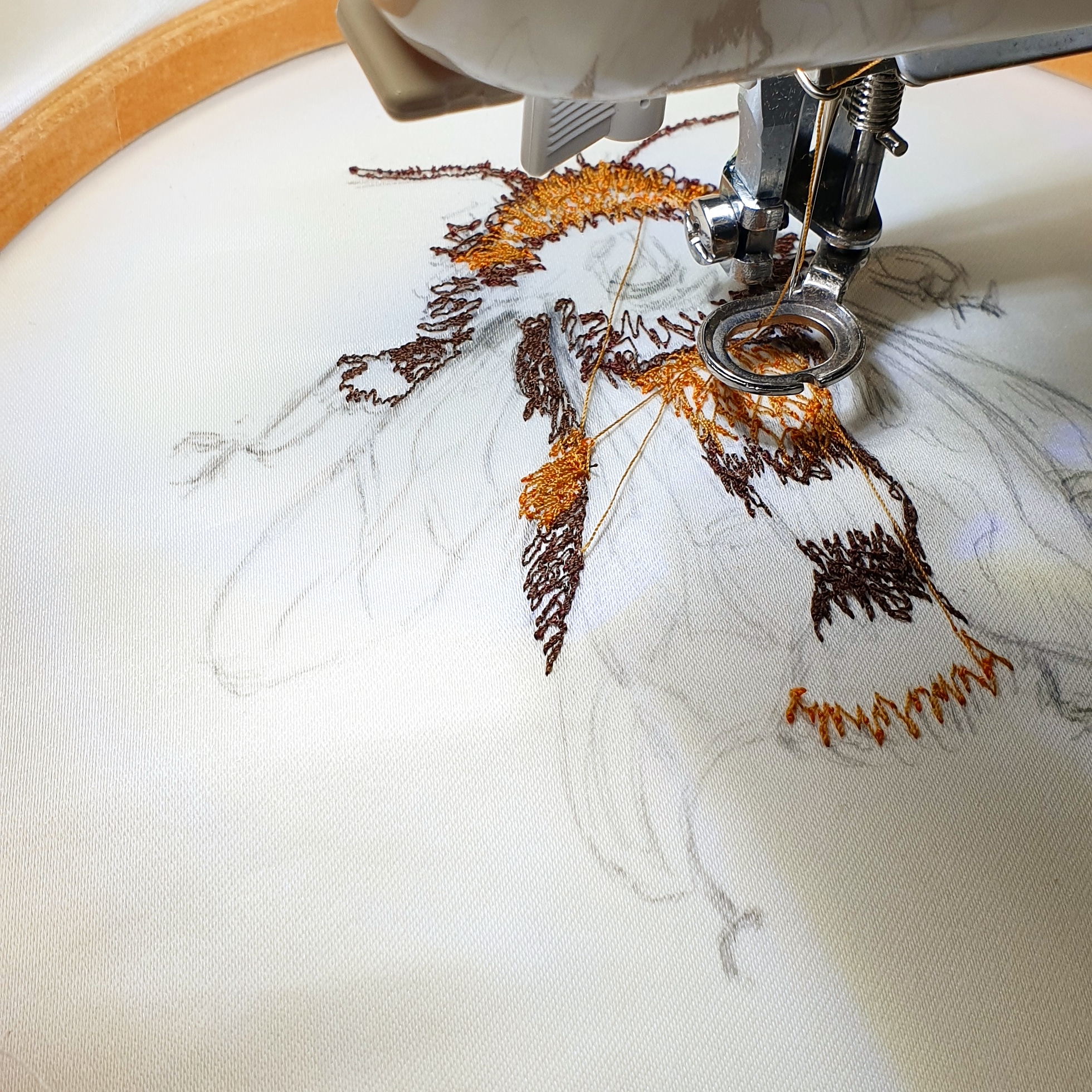
- Free-motion embroidery
- Washing out if using wash-away stabiliser
- Hand stitching and embellishments
- Finishing and mounting
Why Textile Art Takes Longer Than Many People Expect
When I embroider fluff onto cats, spots onto starlings, or sew beads onto dragons, I am actively making every single mark with a needle - that takes a lot of time. Applique can be much quicker, but still unlikely to be as quick as acrylic or watercolour for getting marks on a page. It's a slow process, but textiles have so many lovely and unique qualities that it's worth it.
A Real Example From One of My Pieces
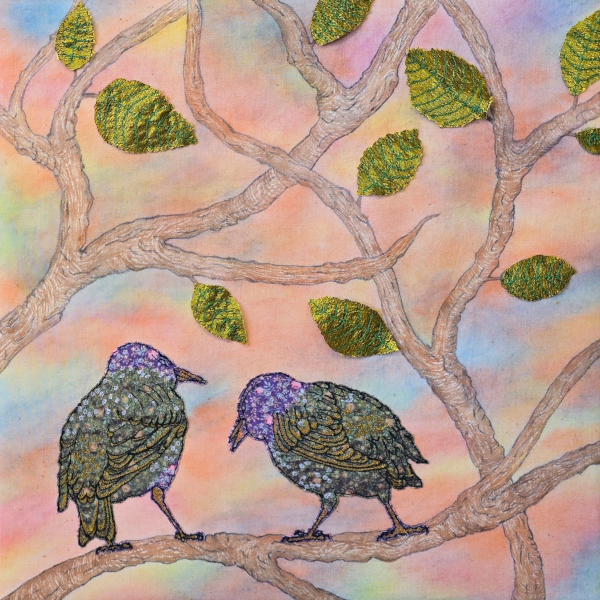
Here is a break down of the hours involved in making this 12x12 inch Camden Starlings textile art piece, which is one in a series of artworks. This piece incorporates drawing, painting, free motion embroidery (drawing with my sewing machine) and some hand stitching.
- Research: this is hard to quantify, as the series came from visiting Camden Market in London. I took many photos and videos of the starlings while I was there.
- Sketching: several hours sketching starlings from various photos and videos.
- Composition: several hours choosing which starlings to make and sketching out various compositions, then deciding which one I liked best.
- Choosing fabrics: half an hour, all of the fabric in this piece is from my abundant fabric stash, as I like to use repurposed fabric as much as possible to make my work more environmentally friendly
- Fabric painting: this takes time over a couple of days. The background was just plain off-white, so it took several hours to paint the sunset, and then draw out and paint the branches. Then the colour changes further over the next several hours, so I prefer to leave it overnight to see exactly what the finished colour I'm working with will be.
- Free-motion embroidery: we'll say 2 hours stitching and an hour drawing.
- Washing out if using wash-away stabiliser: half an hour plus drying time.
- Hand stitching and embellishments: a couple of hours to make, position and hand sew on all of the leaves.
- Finishing and mounting: this is mounted on canvas so it took an hour to decide exactly where I wanted edges to line up, and then to sew it on.
- Total: 16 hours is a loose estimate, which doesn't account for drying time or thinking time.
Conclusion
The time invested is part of what makes each piece unique: every mark is considered. That's not unique to textile art, as it's the same situation for drawing and painting, and most art forms. It's a physically slow process, requiring many coordinated movements, and thought processes.